Anion Gap Calculator for Standard Lab Assessment and Analysis
An Anion Gap Calculator is a handy tool for fast lab assessment, guiding you analyze electrolyte patterns and spot an acid-base disorder that may need follow-up. In routine screening, the anion gap is especially valuable because it turns a typical electrolyte panel into a more informative clinical clue. By looking at sodium, chloride, and bicarbonate in combination, you can assess acid-base balance and detect possible metabolic imbalance earlier.
This calculation is not meant to take the place of clinical judgment. Rather than that, it helps with interpretation of lab values in the right clinical context. For many patients, especially during routine review of a basic metabolic panel or comprehensive metabolic panel, the anion gap offers a fast way to structure abnormal findings and judge whether follow-up is needed.
What the anion gap indicates in standard metabolic labs
The anion gap is a calculated value based on common electrolytes measured in routine testing. It captures the gap between positively charged and negatively charged ions in the blood, using the main lab measurements most clinicians already review. The core components are sodium, chloride, and bicarbonate.
In basic terms, the anion gap helps estimate whether there are unmeasured acids or other charged particles altering the blood chemistry. That is why it can serve as a diagnostic clue during routine review. A normal result does not rule out every problem, but it can help refine the evaluation when a patient has symptoms or abnormal lab values.
The calculation is often used as part of an electrolyte panel to support screening for metabolic acidosis. It is not a standalone diagnosis. Instead, it adds another layer to the overall assessment of acid-base balance, especially when electrolyte trends vary over time.
A useful way to think about the anion gap is that it helps show whether the body is “missing” measured negative ions or whether extra acids are present. That makes it valuable for routine review, follow-up, and quick evaluation of abnormal chemistry results.
Using an anion gap calculator step-by-step
An Anion Gap Calculator is straightforward to use when you know the right calculator inputs. Most calculators require the values for sodium, chloride, and bicarbonate. Some also accept albumin entry so the result can be corrected for albumin correction.
The basic anion gap formula is typically: This standard formula is generally:
Anion gap = sodium - (chloride + bicarbonate)
To perform the calculation step by step:
- Identify the patient’s electrolyte values on the lab report.
- Enter sodium, chloride, and bicarbonate into the calculator.
- Examine the calculated anion gap.
- Assess the result with the lab’s reference range or reference interval.
- If albumin is low, determine whether an albumin correction is needed.
When using the calculator, pay attention to units and lab method. Slight changes in reporting can affect the final measurement. Because of this, the result should always be interpreted with the patient’s overall picture, not in isolation.
If albumin is included, the calculator may produce an adjusted result. This is especially important because low albumin can mask an elevated anion gap. A quick adjusted calculation can enhance detection during routine review and help reveal a more accurate metabolic pattern.
Typical, high, and decreased anion gap values
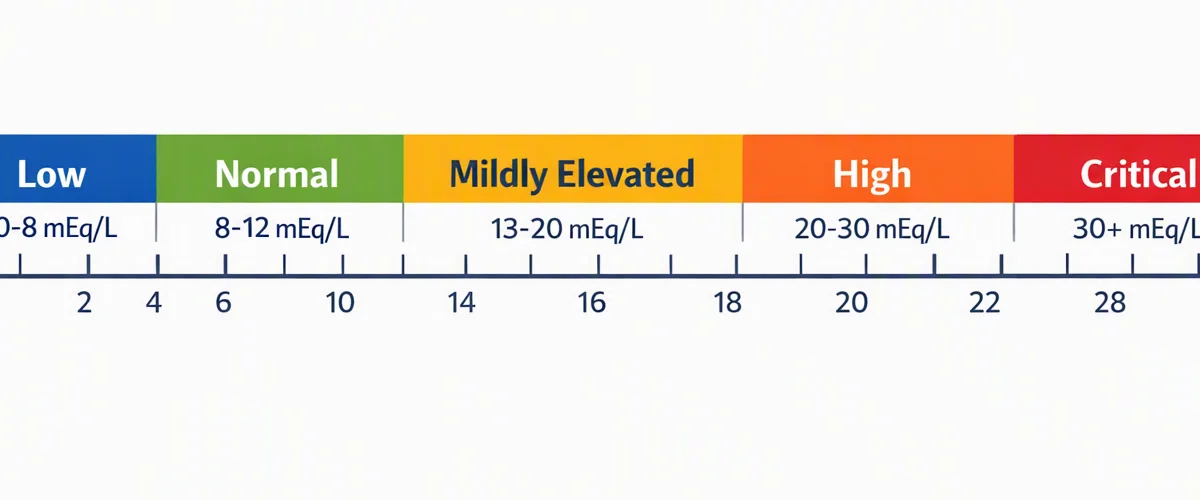
A expected anion gap generally implies that the measured electrolytes are in a harmonious pattern, though this cannot confirm that everything is within range. The expected reference range may vary from one laboratory to another because of laboratory variation in methods and interpretation.
A high anion gap metabolic acidosis is the primary abnormal pattern many clinicians look for. It implies that unmeasured acids are building up, which can be an important sign of a metabolic problem needing follow-up. This is one of the most important reasons the anion gap is included in routine lab review.
A low anion gap is uncommon but still meaningful. It may indicate lab artifact, low albumin, or other changes affecting ion balance. Because the calculation depends on measured electrolytes, a low value should lead to a careful check for reporting issues and broader clinical interpretation.
It is important to note that laboratory variation can affect whether a value is considered acceptable, mildly abnormal, or clearly abnormal. One lab’s threshold may vary a little from another’s. That is why using the local reference range matters more than relying on a single universal number.
In everyday practice, the main value of the anion gap is identifying patterns. A normal value may offer reassurance in some settings, while a high value may signal a more urgent acid-base disorder. A low value may be a clue to repeat the sample, consider albumin, or review the full chemistry profile.
Frequent causes of an abnormal anion gap
When the anion gap is abnormal, the most helpful next step is to think in patterns rather than isolated numbers. In routine review, a number of common conditions can explain an elevated or reduced result. The clinical question is whether the pattern fits the patient’s symptoms, history, and other lab values.
Lactic acidosis is a classic cause of elevated anion gap. When lactate builds up, it contributes to metabolic acidosis and shifts the electrolyte relationship. This is often seen in situations involving poor tissue oxygen delivery, severe illness, or other stress states.
Ketoacidosis is another important cause. In this setting, ketone bodies increase acid load and push the anion gap higher. This pattern can appear in uncontrolled diabetes, prolonged fasting, or other metabolic states where the body burns fat for fuel.
Renal failure can also produce a high anion gap because the kidneys are less able to remove acid effectively. As acid retention increases, the calculation may reflect a broader metabolic disturbance. This makes the anion gap a helpful fast-check tool during chemistry review.
Hypoalbuminemia is a common explanation for a low or misleading result. Since albumin is a major negatively charged protein, a drop in serum albumin can lower the measured gap. This is why albumin should always be part of the interpretation when the result seems unexpected.
Other causes can include medications, toxin exposure, or shifts in the way ions move across compartments. A chloride shift may occur as the body tries to maintain electrical neutrality, changing the relationship between measured electrolytes. Even when the cause is not obvious, the anion gap can still shape the next step in evaluation.
Correcting the anion gap for albumin
Because albumin contributes significantly to the body’s unmeasured anions, albumin correction is often needed for a better interpretation. This is especially true when the patient has reduced serum albumin. Without adjustment, the anion gap may appear unchanged even when an acid–base problem is present.
The concept behind the correction is easy to understand: if albumin is reduced, the measured anion gap may be spuriously low than expected. An adjusted anion gap accounts for that change and gives a more useful estimate for clinical interpretation. This can improve assessment in routine lab review, especially when the numbers do not seem to match the patient’s condition.
Albumin matters because of protein binding and its role as an unmeasured anion. When serum albumin falls, the balance of measured ions changes. The correction helps restore context to the calculation and improves the quality of the clinical interpretation.
For practical use, albumin correction is most helpful when there is marked hypoalbuminemia or when an otherwise suspicious lab pattern is not explained by the unadjusted result. In those cases, an adjusted calculation may reveal underlying metabolic acidosis or support a clearer threshold for concern.
Even when a calculator performs the correction on its own, it remains important to understand what the adjustment means. The corrected value is not a separate diagnosis. It is a better measurement for estimating the real acid-base pattern in context.
How anion-gap value integrates into regular laboratory review
The anion gap is especially useful when it is part of a broader review of the basic metabolic panel or comprehensive metabolic panel. These tests provide the raw data that make the calculation possible. In routine lab review, the anion gap can turn a standard chemistry set into a more useful snapshot of acid-base status.
Clinicians often use the result to screen for hidden problems, show that an abnormal electrolyte pattern makes sense, or decide whether further assessment is needed. That is why the anion gap is valuable not just for emergencies, but also for routine review and follow-up. It provides context for the overall clinical interpretation of lab values.
For example, if bicarbonate is low and sodium and chloride are changing in a predictable way, the anion gap can help show whether the pattern fits a high-gap process or a normal-gap process. That distinction matters because it shifts the direction of the evaluation.
The anion gap is also useful during trend review. A single number can be informative, but https://anion-gap-calculation.com/ comparing results over time often gives a better picture of whether a metabolic issue is improving, stable, or worsening. This is one reason the calculation remains a core part of routine chemistry assessment.
In practical terms, the best use of the anion gap is to support efficient decision-making. It can highlight abnormal findings that deserve attention, but it should always be reviewed with the full electrolyte panel, symptoms, and clinical context.
Next steps after using the anion gap
Once you have used the calculator, your next step is not simply to classify the result as within range or out of range. Good interpretation starts with asking whether the value fits the rest of the labs and the patient’s clinical picture. If it does not, you may need further data before making a decision.
Retesting may be appropriate when the value is unexpected or does not match the clinical picture. It can help rule out collection issues, lab variability, or temporary changes. Because laboratory variation can influence the result, a repeat measurement may clarify whether the abnormality is actual.
An arterial blood gas can assist when the acid-base picture is uncertain or more severe assessment is needed. A venous blood gas test may also be helpful in many settings and can offer additional detail without requiring arterial sampling. Either test can aid deeper evaluation of acid-base balance.
Most importantly, use clinical correlation. The anion gap is only one finding among many, and it should align with the patient’s symptoms, medical history, and other observations. If the result suggests metabolic acidosis or a different important metabolic issue, the follow-up should be determined by the full clinical picture.
If the result is abnormal, the next step may include reviewing current medicines, fluid status, kidney function, glucose, lactate, or ketones. When the result is normal but concern remains, think about whether albumin adjustment or repeat evaluation is needed. In short, the calculator helps with initial screening, but interpretation is what turns the number into action.
Frequently asked questions about anion gap results
What is anion gap calculator used for?
An Anion Gap Calculator is designed to quickly determine the anion gap from common lab values and support interpretation of electrolyte results. It helps with evaluating for metabolic acidosis, assessing acid-base balance, and identifying patterns that may need follow-up in standard review.
What is a normal anion gap interval?
The reference range for a normal anion gap is determined by the laboratory and technique used. That means there is not one fixed number. Always compare the result to the site-specific normal range listed by the lab and consider testing variation when reviewing the result.
Why do you adjust the anion gap for albumin?
You use albumin correction because low albumin level can make the anion gap look reduced than it truly is. Since albumin contributes to the body’s negative charge through protein interactions, an albumin-adjusted anion gap can offer a more accurate measurement and enhance clinical interpretation.
What causes a elevated anion gap?
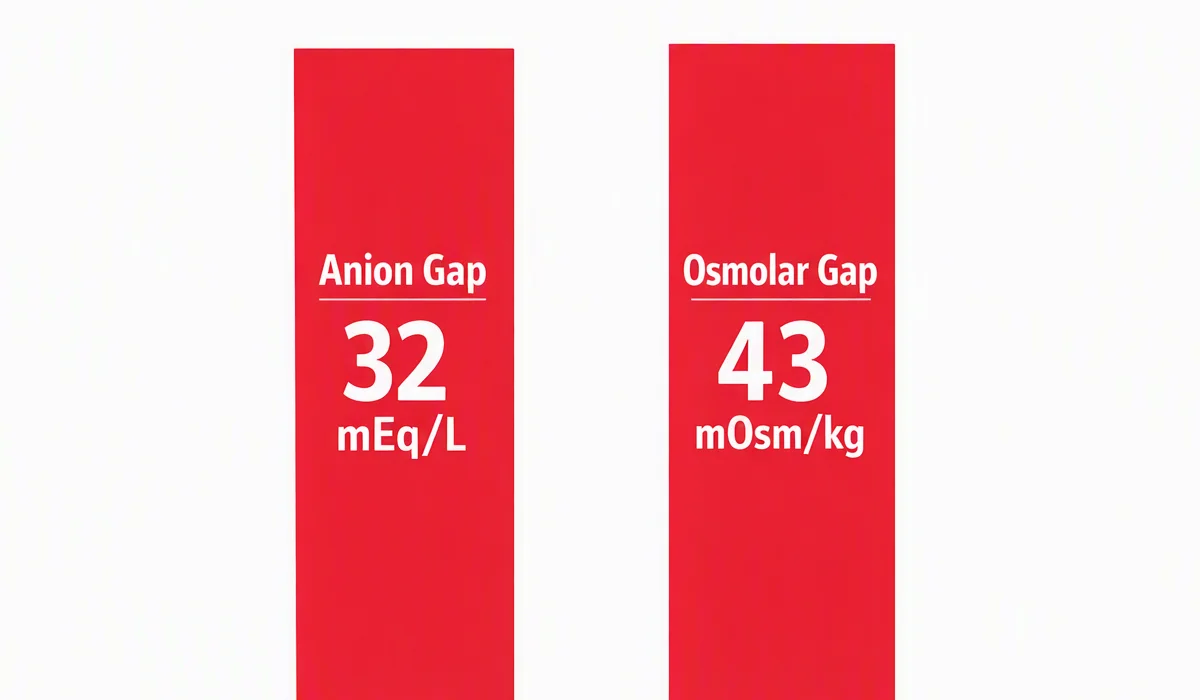
A high anion gap is commonly associated with lactate acidosis, ketosis-related acidosis, and renal failure. These conditions increase unmeasured acids and often lead to anion gap metabolic acidosis. The result should consistently be reviewed with the full clinical context and other lab values.

Can a normal anion gap still mean a problem is present?
Yes. A typical result does not rule out all disease. Some patients may have normal anion gap metabolic acidosis, or the abnormality may be masked by hypoalbuminemia. That is why the anion gap should be considered alongside the rest of the BMP, the complete metabolic panel, and the overall clinical interpretation.